
Delivery route optimisation: how to cut 25% of kilometres without losing a customer
Time windows, capacities, Casablanca urban traffic: what an optimisation engine like PTV Smartour changes in daily planning.
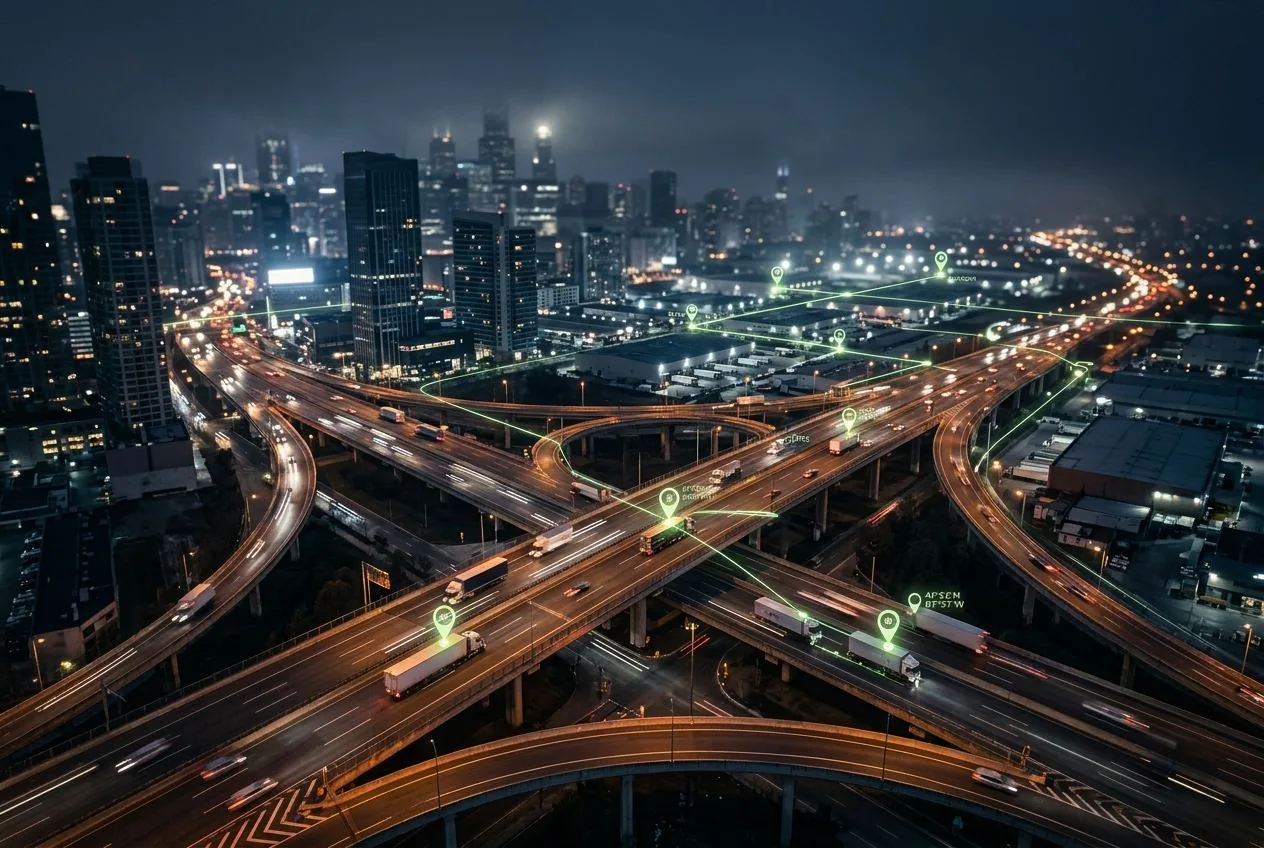
Planning 40 routes for 600 delivery points by hand takes hours and produces a sub-optimal plan as soon as the first disruption occurs. An optimisation engine solves the same problem in minutes while respecting every business constraint.
Constraints the algorithm handles for you
Customer time windows, vehicle capacity and type, service time per stop, drivers' regulatory breaks, restricted access zones and historical traffic per time slot: parameters a planner cannot arbitrate simultaneously.
Measured gains
Our clients see on average −15 to −25% kilometres, +20% stops per vehicle and over 95% time-window compliance. Certified CO₂ calculation also simplifies the CSR reporting demanded by large shippers.
Static or dynamic?
Static planning (the day before) is enough for regular distribution. Dynamic mode re-optimises during the day according to delays and urgent orders: that is where AI adds the most value, reassigning jobs in real time through the TRICOLIS driver app.
Deployment
PTV Smartour integrates with your ERP or WMS via API. Constraint setup takes two to four weeks; ROI is typically reached in under six months. Contact OMNIYAT, PTV Group partner in Morocco, for a simulation on your real data.